
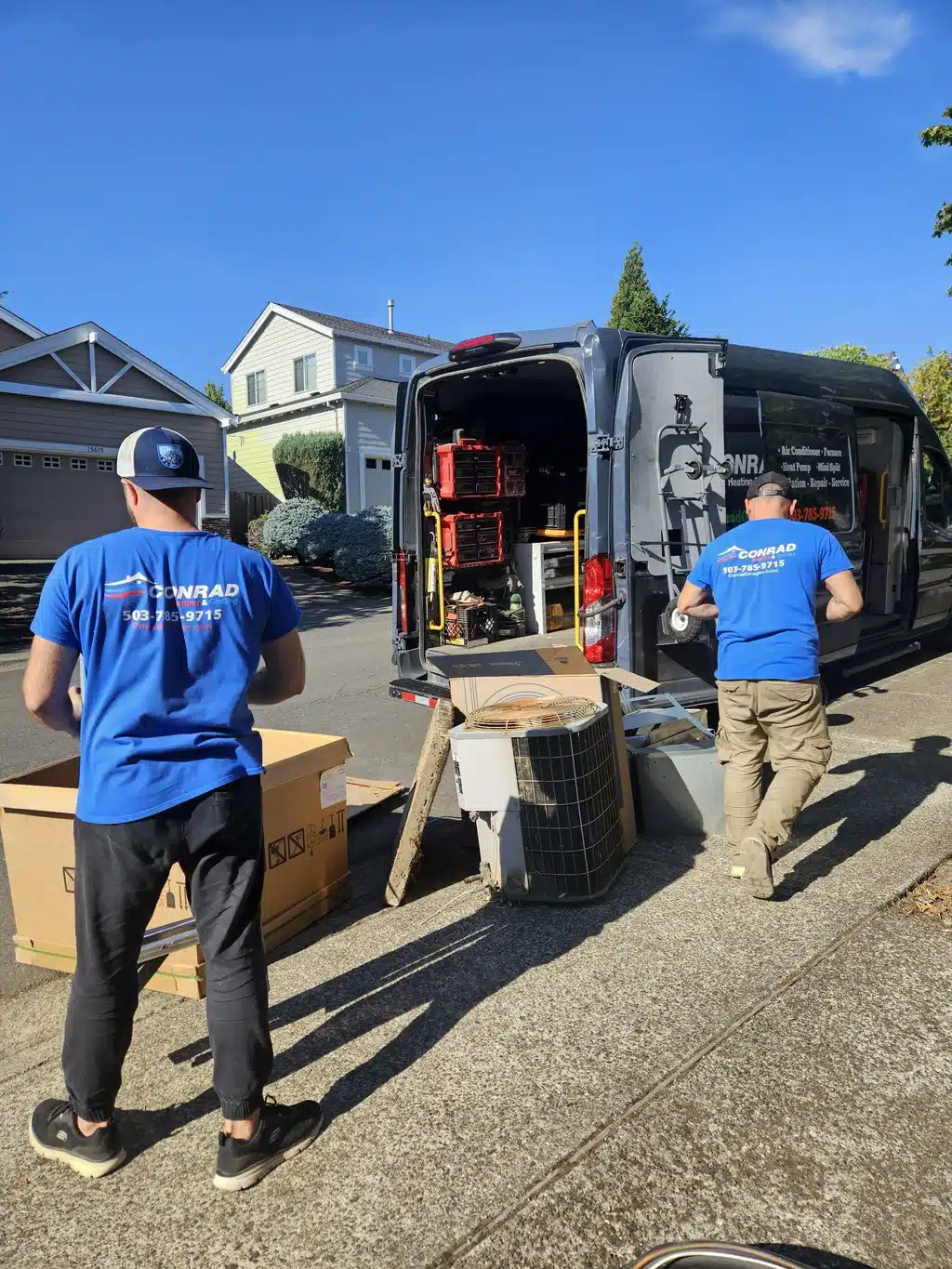

Hybrid Water Heater Installation
A hybrid water heater uses heat pump technology to deliver hot water at three to four times the efficiency of a standard electric tank. Conrad Heating and Cooling installs heat pump water heaters for homeowners across Beaverton and the Portland Metro area. Call 503-785-9715 today. Oregon’s Energy Trust rebates and the federal IRA tax credit make the upgrade more affordable than most homeowners expect. WHI-certified, CCB-licensed, in-house technicians. Upfront flat-rate pricing, same-day scheduling, 4.9 Google rating.
Customers rate us a 4.9 out of 5  on Google.
Our Hybrid Water Heater Services
Conrad handles heat pump water heater installation, repair, and maintenance for homeowners across Portland Metro — WHI-certified, in-house technicians, no subcontractors.

Hybrid Water Heater Installation
Space assessment, electrical panel check, condensate routing, expansion tank evaluation, and full installation with operating mode setup. Energy Trust of Oregon rebates and federal IRA tax credits available. Written diagnostic report. Same-day availability.

Water Heater Repair
Element failure, thermostat issues, heat pump compressor diagnostics, condensate pump replacement, and T&P valve service. Conrad diagnoses before recommending replacement — same WHI-certified team. See water heater repair.

Water Heater Maintenance
Annual anode rod check, element performance test, refrigerant pressure check (on heat pump units), condensate drain service, and T&P valve inspection. Maintenance that protects system efficiency and warranty coverage.
Why Beaverton Is a Strong Market for Heat Pump Water Heaters
Oregon’s climate is well-suited to heat pump water heaters. Mild, humid winters mean utility rooms and basements across the Portland Metro area stay above 40°F for most of the year — which is exactly what a heat pump water heater needs to run efficiently. Pacific Northwest ambient humidity supports the heat exchange process. Conrad’s technicians are WHI certified, CCB licensed, bonded, and insured — trained specifically on heat pump water heater installation, not just standard tank swaps. Upfront flat-rate pricing and same-day availability. See full water heater installation services Conrad offers.
What Your Home Needs for a Hybrid Water Heater Installation
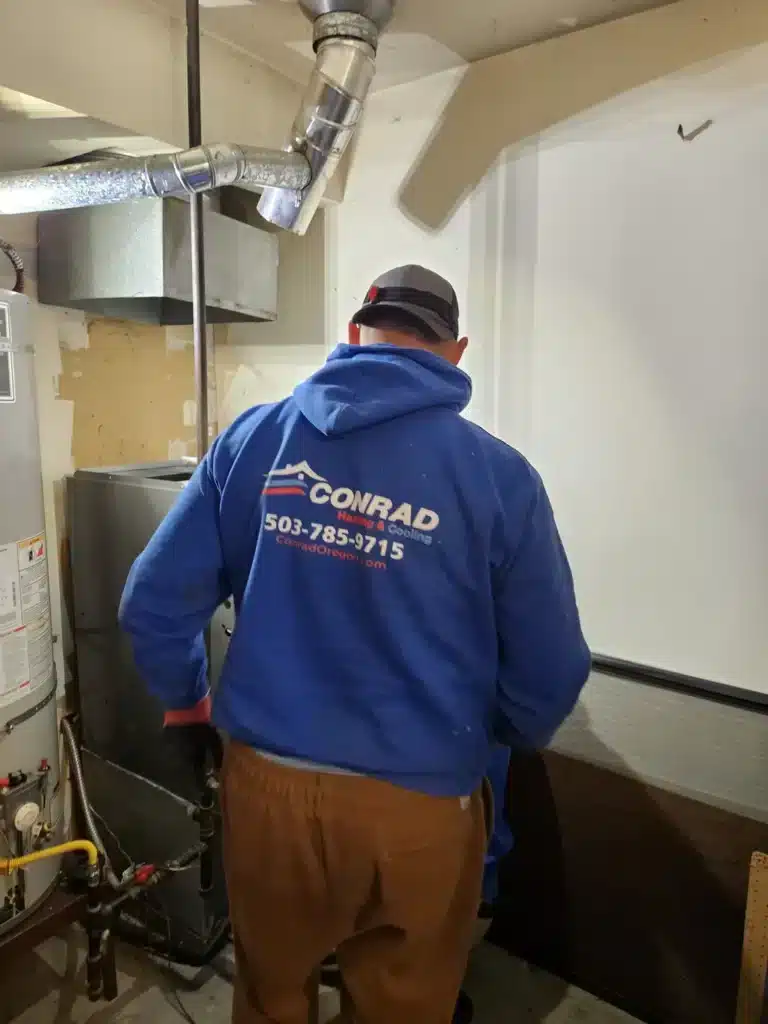
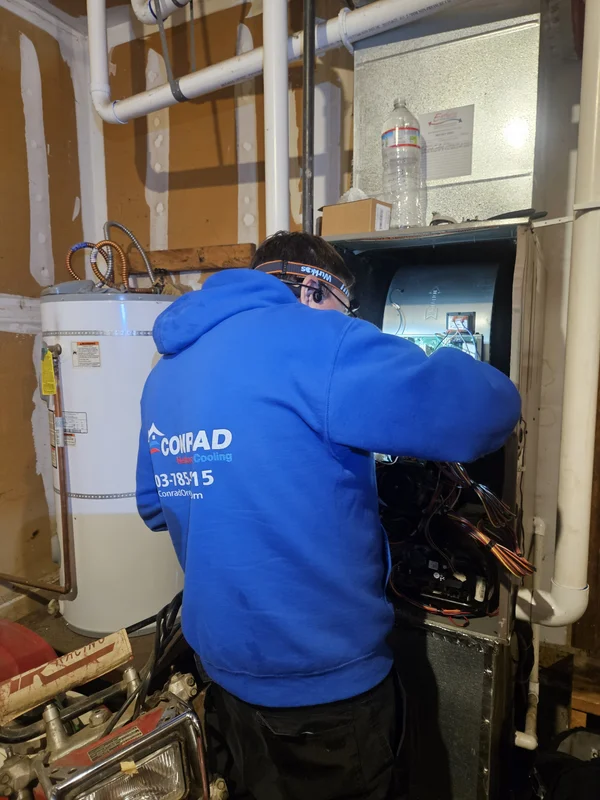
Space is the most common installation barrier. A heat pump water heater needs at least 1,000 cubic feet of air volume — roughly a 10×10×10 foot room — and 7-foot ceiling clearance. The space must stay between 40°F and 120°F year-round. Most utility rooms and basements in the Portland Metro area meet this without issue.
Two things often surprise homeowners: condensate and noise. HPWHs produce 1–2 gallons of condensate per day — a floor drain or condensate pump is required. The compressor runs at about 50 dB; fine for utility rooms and garages, not ideal next to a bedroom. Electrical: same 240V/30A dedicated circuit as a standard electric water heater. Conrad checks all of this during the site visit, before equipment is ordered.
How a Hybrid Water Heater Works — and Which Mode to Use
A heat pump water heater pulls heat from surrounding air and transfers it to the tank via refrigerant cycle — the same principle as a mini-split in reverse. UEF ratings run 3.5–4.0+. Moving heat is far more efficient than generating it. The unit also dehumidifies the surrounding space as it runs.
Most homeowners need guidance on operating modes at installation. Heat Pump Only delivers the best efficiency but slowest recovery — suitable for low-demand households. Hybrid/Auto mode (default on most units) lets the system select heat pump or resistance heating based on demand — the right setting for most Portland Metro homes. Electric Only is fastest but runs at standard efficiency. Conrad sets the mode during commissioning.
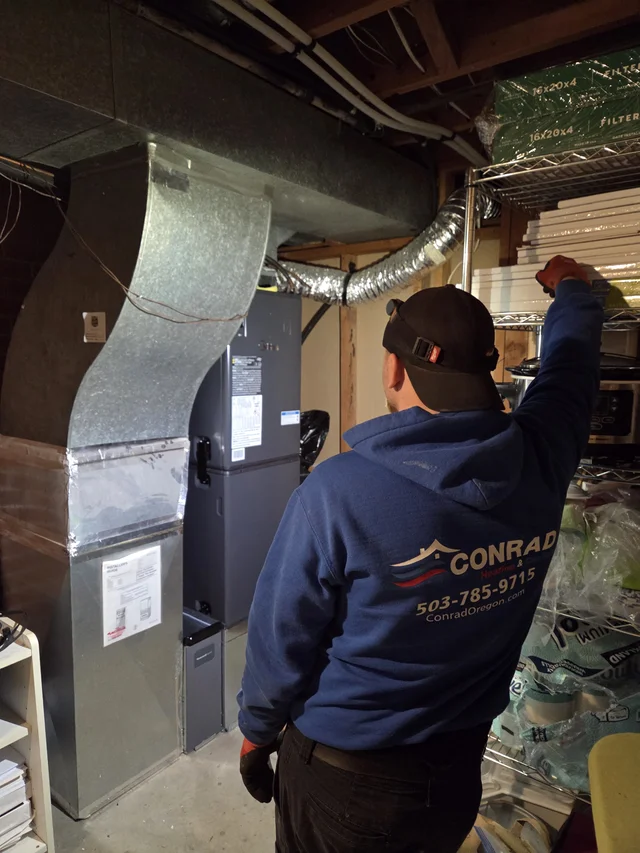
How Conrad Assesses a Hybrid Water Heater Installation
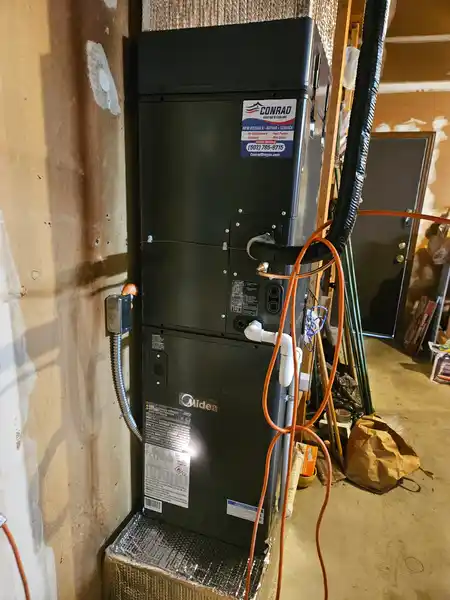
Every hybrid water heater installation starts with a site assessment. Conrad’s technician measures floor area and ceiling height, confirms air volume meets the 1,000 cu ft minimum, checks the 240V/30A electrical circuit, reviews condensate drain options, and evaluates the existing water heater type. Homes switching from gas to electric get a panel capacity check at the same visit. Expansion tank status is reviewed — Oregon code requires one on closed-loop systems. All of this happens before any unit is selected or ordered.
Hybrid Water Heater Installation Day: What to Expect
Existing unit drained and removed, new HPWH set and leveled. Water line connections go in with dielectric unions where galvanized pipe meets the tank. Electrical connections wired and verified. Condensate line routed to floor drain or condensate pump. Expansion tank installed where code requires. Seismic strapping applied. System filled and purged of air; heat pump mode confirmed running; UEF and recovery tested. Operating mode set per homeowner preference. Conrad handles permitting. Written diagnostic report before leaving. Water heater repair is handled by the same team.
Hybrid Water Heater Installation Cost in Beaverton, OR
Hybrid water heater installation in Oregon typically runs $1,800–$3,500 installed before incentives — depending on unit model, tank capacity (50–80 gallons), and whether a condensate pump or additional electrical work is needed. After incentives the number shifts: the Energy Trust of Oregon offers rebates on qualifying heat pump water heater installations, and the federal IRA provides a 30% tax credit on the unit cost. Combined, those two programs can offset several hundred to over a thousand dollars — bringing net cost within range of a standard electric tank replacement. Conrad provides upfront flat-rate pricing and free estimates. See all water heater services Conrad offers.

Book Your Furnace Maintenance Today
Fall slots fill faster than most people expect. Conrad Heating and Cooling serves Beaverton and the Portland metro — Mon–Sun, 8 AM–7:30 PM.

Why Choose Conrad for Hybrid Water Heater Installation?

Expert Technicians
Conrad’s technicians are CCB licensed and WHI certified — trained specifically on heat pump water heater installation, including space volume assessment, condensate routing, and operating mode setup. HPWH installation involves more pre-work than a standard tank swap. Every technician is background-checked and works in-house. Conrad is familiar with Rheem ProTerra, A.O. Smith Voltex, Bradford White AeroTherm, and other current HPWH models.

Prompt Service
Same-day scheduling is available across Portland Metro. Conrad offers 24/7 dispatch for failed water heaters. For HPWH installations, Conrad schedules a site assessment first to confirm space volume, electrical capacity, and condensate drain options — so installation day runs without surprises. If a standard electric tank replacement is needed while HPWH equipment is ordered, Conrad handles that interim option too.

Everything In-House
Conrad handles the complete hybrid water heater installation scope — space assessment, electrical panel check, unit selection, water line connections, electrical hookup, condensate routing, expansion tank evaluation, seismic strapping, permit, and written diagnostic report. Operating mode is set during commissioning and explained to the homeowner. Follow-up service, element repair, and expansion tank work all go through the same team.

Customer-Centric Approach
The flat-rate price is confirmed before work begins — including any condensate pump or panel work the site assessment identifies. After installation, a written diagnostic report documents what was installed, how it performed during commissioning, and the operating mode selected. Conrad explains what Hybrid/Auto, Heat Pump Only, and Electric Only modes mean in practice so the homeowner can manage energy use actively.