
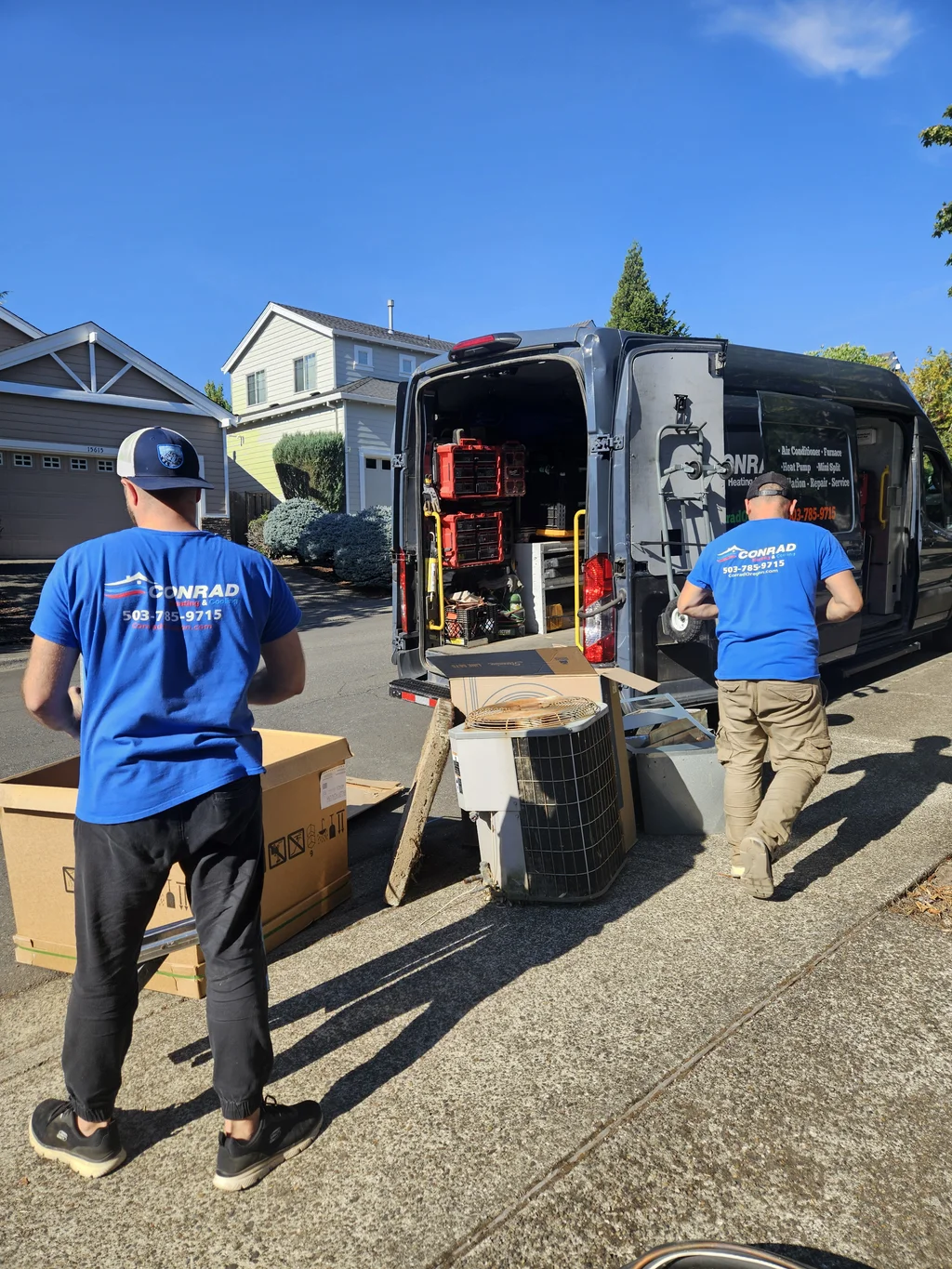

Central AC Maintenance
When your home’s AC stops working during a Portland Metro heat event, it’s not just uncomfortable — for elderly residents, young children, and pets, it’s a health risk. Conrad Heating and Cooling provides central AC maintenance for homeowners in Beaverton and the Portland Metro area. Call 503-785-9715 to reach EPA608-certified, CCB-licensed technicians who service all major central AC brands with upfront flat-rate pricing, spring tune-up scheduling, and a written maintenance report after every visit. In-house team only, no subcontractors. Preventive maintenance before Portland Metro cooling season — Conrad catches efficiency losses and failing components before they become mid-summer repair calls. Google-rated 4.9 out of 5.
Customers rate us a 4.9 out of 5  on Google.
Our Air Conditioning Services
Conrad handles emergency AC repair, maintenance, and installation for homeowners across Portland Metro — all in-house, all major brands, no subcontractors.

AC Repair
Fast diagnosis and same-day availability — Conrad services central AC, heat pumps, and ductless mini splits for homeowners across Portland Metro. All major brands. Written diagnostic report after every visit so you know exactly what was found and fixed.

AC Maintenance
Seasonal tune-ups, coil cleaning, condensate drain flush, and filter checks — the service visits that prevent emergency repair calls. Schedule AC maintenance before the cooling season starts and avoid summer breakdowns.

AC Installation
New system sizing and installation using a proper load calculation — SEER2-rated equipment matched to your home, not just square footage. See all AC installation options Conrad offers.
Why Choose Conrad for Central AC Maintenance in Beaverton?
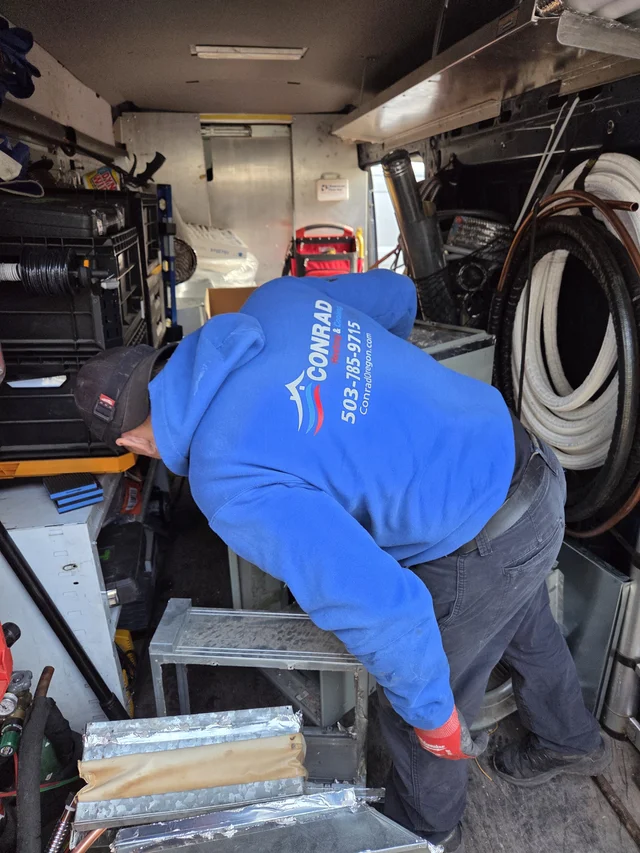
Conrad is CCB licensed and EPA608 certified — bonded and insured, in-house technicians on every job. No subcontractors, no relay calls. The same technician handles the maintenance visit and issues a written report documenting what was checked, what was found, and any repair recommendations. Conrad is an authorized Bosch dealer trained on all major central AC brands — Lennox, Carrier, Trane, Daikin, Goodman. Upfront flat-rate pricing on all maintenance visits, same-day availability where scheduling allows. All part of Conrad’s air conditioning services for Portland Metro.ot just a receipt. You know what was found, what was fixed, and what to watch for. The same technician who diagnosed the problem handles the repair. No subcontractors, no relay calls, no surprises on the invoice. Upfront flat-rate pricing and same-day availability. See all air conditioning services Conrad offers.
What Central AC Maintenance Actually Does for Your System
Warm air from vents is the obvious signal — but most AC problems appear earlier. Short cycling (system runs briefly then shuts off before the house cools) often points to refrigerant or airflow restriction. Ice on the refrigerant lines means low charge — not a reason to keep running. Hissing indicates refrigerant escaping; grinding or banging points to a bearing or loose component.
Water pooling near the indoor unit is usually a blocked condensate drain — Oregon’s damp climate means algae builds in drain lines year-round, not just summer. Spring pollen also clogs evaporator coils faster in this region than drier markets, creating airflow restriction that gets misdiagnosed as low refrigerant.
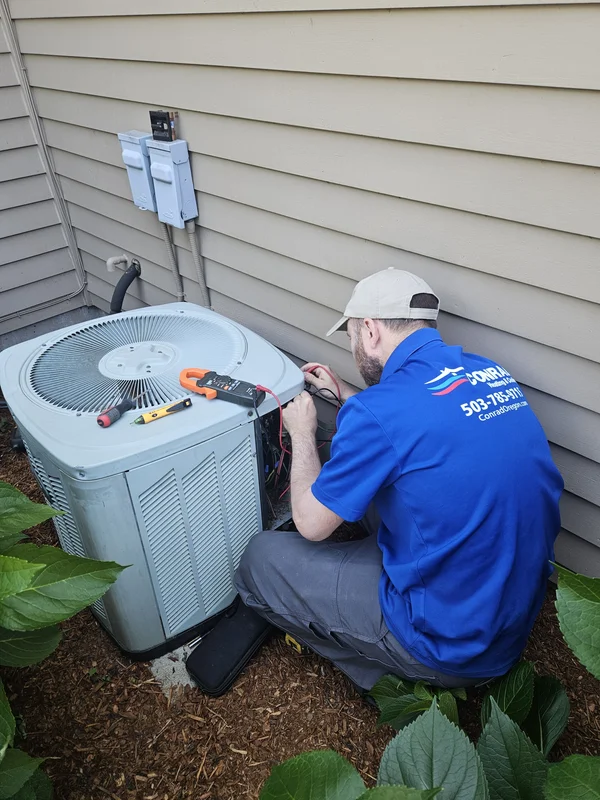
What Conrad’s Central AC Maintenance Visit Covers
Capacitor and contactor failures are the most common single-visit repairs — stockable parts that cause sudden shutdowns or hard starts. Conrad also handles refrigerant leaks and recharge (R-410A standard; R-22 units are often better replacement candidates), condenser fan motor and blower motor replacement, iced evaporator coils, condensate drain clearing, and thermostat and control board diagnostics.
Central AC Maintenance Cost and Annual Plans
A stuck reversing valve delivers heating when you’ve called for cooling — the most common heat pump-specific failure. Conrad diagnoses reversing valve issues, refrigerant charge, defrost board problems, and coil condition on heat pump systems in cooling mode. Cooling-mode diagnosis is distinct from heating-mode; Conrad checks both on every service call.
What Homeowners Can Do Between Professional Tune-Ups
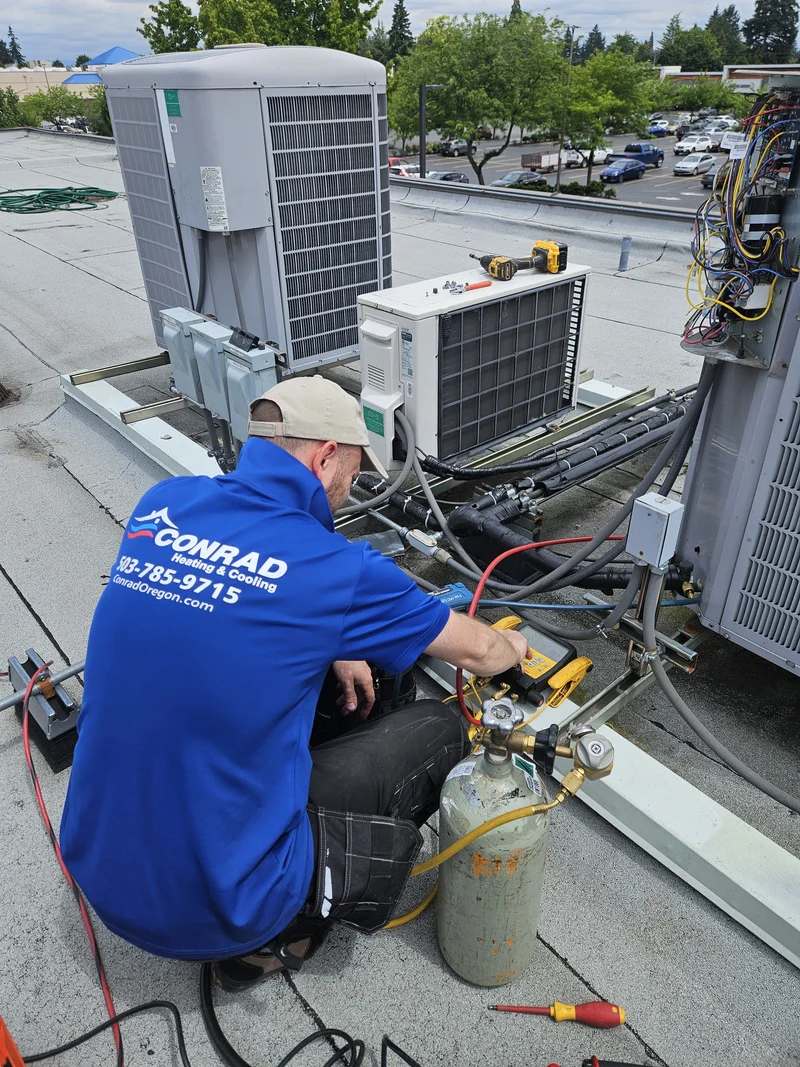
For commercial clients, a failed AC unit carries real costs. A restaurant kitchen at 90°F is a food safety issue. A medical office without cooling faces patient safety and regulatory concerns. A retail space loses customers by the hour on a 95°F July day. Portland Metro’s summer heat events now run multiple days — commercial buildings are exposed faster than residential properties.
Conrad offers emergency dispatch 24/7 across Beaverton and Portland Metro. Stocked trucks mean most common commercial AC failures — capacitor, contactor, refrigerant charge — get resolved on the first visit.
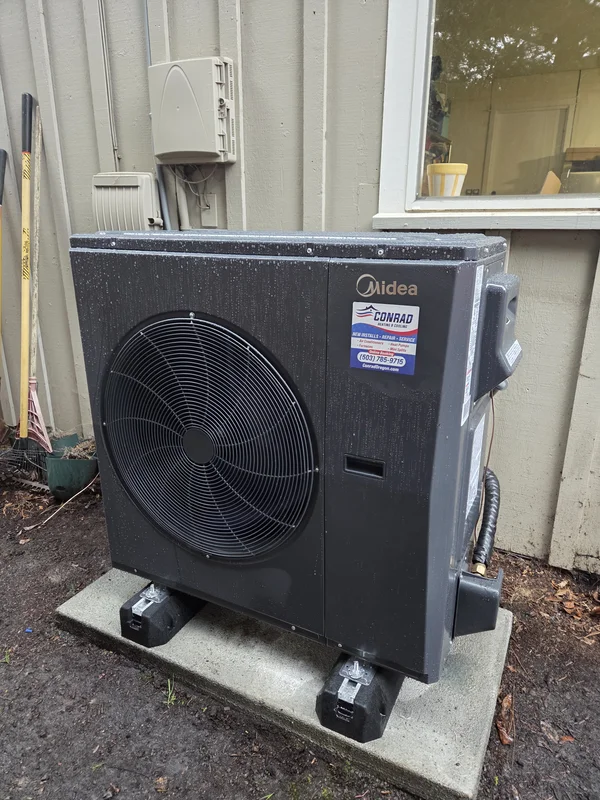
Schedule Your Spring AC Tune-Up Today.
Every service call starts with a systematic diagnosis — not a symptom-based guess. Conrad’s technician checks thermostat signal output, runs refrigerant pressure at suction and discharge (low suction = refrigerant loss or restricted airflow; high discharge = dirty condenser coil or failed outdoor fan), and measures amp draw on compressor and fan motors. That 20–30 minute assessment is what separates a correct fix from a parts swap that misses the root cause.
Findings are explained in plain language before any work starts — what’s wrong, what it costs, and whether repair or replacement makes more sense. Same-visit repair wherever parts are on the truck. Larger replacements quoted with a clear timeline. Written diagnostic report before the technician leaves.
A clear rule: if repair cost exceeds 50% of replacement cost and the unit is over 10–12 years old, replacement is usually the better investment. Oregon-specific triggers sharpen that decision. R-22 refrigerant systems — any unit installed before 2010 — are expensive to recharge because R-22 is no longer manufactured. Systems with a SEER rating below 13 don’t meet the current Pacific Northwest minimum of 13.4 SEER2. Repeat failures in one cooling season signal system-wide degradation.Older Portland Metro homes — many with original systems from the mid-2000s — are at or past that decision point. Conrad provides an honest assessment at every diagnostic visit. See central AC installation if replacement makes more sense.
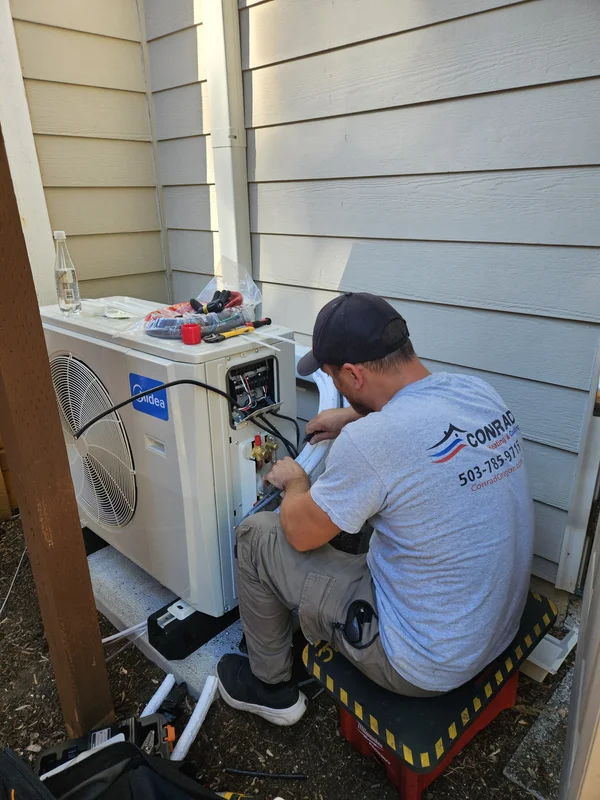

Why Choose Conrad for Your Central AC Maintenance?

Expert Technicians
Conrad’s technicians are CCB licensed and EPA608 certified — the federal refrigerant certification required by law for anyone handling or charging refrigerant. Every tech is background-checked and trained across all major AC brands: Lennox, Carrier, Trane, Daikin, Goodman, Rheem, and Bosch. Conrad is an authorized Bosch dealer. The technician who shows up is a Conrad employee — not a subcontractor dispatched from a third-party network.

Prompt Service
When a home AC fails during a Portland Metro heat event, same-day service is a health matter — not just a comfort issue. Conrad offers same-day scheduling across Portland Metro and emergency dispatch 24/7. Service trucks carry capacitors, contactors, refrigerant, and other frequently replaced components so most AC calls get resolved on the first visit, without parts-ordering delays.

Everything In-House
Conrad handles emergency AC repair, seasonal maintenance, and full system installation — all within one licensed team, no third-party handoffs. If a repair call reveals the system is past its useful life, the same technician who diagnosed the problem can walk through replacement options and handle the installation. One company, one team, from the initial call to the written report.

Customer-Centric Approach
Every service call closes with a written diagnostic report — not just a receipt. It details what was found, what was repaired, what parts were used, and what to monitor. The flat-rate price is communicated and confirmed before any work begins. If repair doesn’t make financial sense given the system’s age and condition, Conrad says so directly, with the data to back it up.