
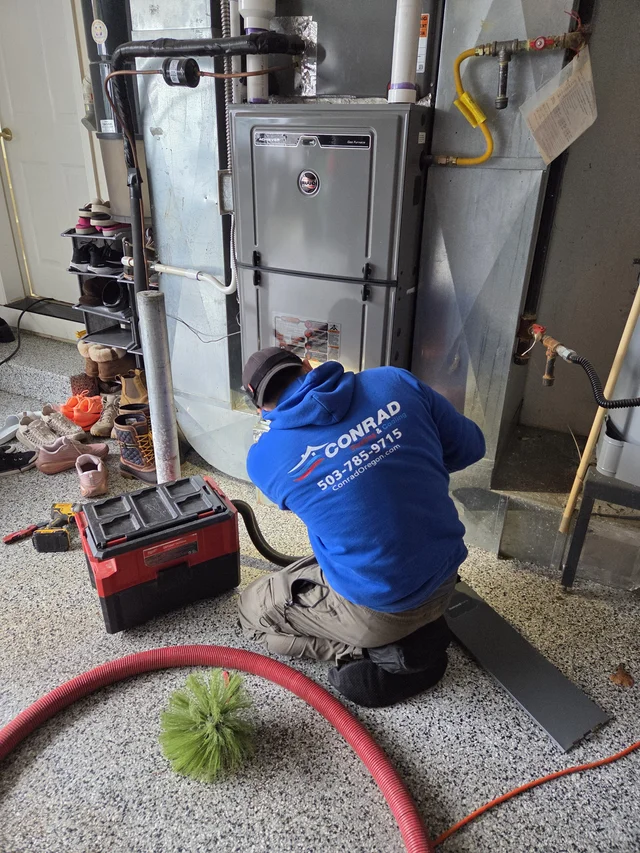

Ductless Mini Split Installation
A ductless mini split is a heat pump — it heats and cools without ductwork, without a gas line, and without the efficiency losses that come with forced-air systems. Conrad Heating and Cooling installs single-zone and multi-zone ductless systems for homeowners across Portland Metro. Call 503-785-9715 to reach EPA608-certified, CCB-licensed technicians today. In-house team only. Upfront flat-rate pricing, same-day scheduling, and a written report after every job. Google-rated 4.9 out of 5.
Customers rate us a 4.9 out of 5  on Google.
Our Ductless Mini Split Services
Conrad handles ductless mini split installation, repair, and maintenance for homeowners across Portland Metro — EPA608-certified, in-house technicians, no subcontractors.

Ductless Installation
BTU load calculation per zone, system selection, lineset routing, refrigerant charging, and commissioning in both heating and cooling mode. Conrad works with Bosch, Daikin, Mitsubishi, LG, and Carrier. Written diagnostic report. Permits handled.

Ductless Repair
Inverter board diagnostics, refrigerant recharge, condensate pump replacement, reversing valve issues, outdoor fan motor service, and defrost board repair. Same-day availability.

Ductless Maintenance
Annual refrigerant pressure check, filter cleaning, coil inspection, condensate drain service, and outdoor unit clearance review. Maintenance agreements available for year-round coverage. See heat pump services for the full scope Conrad covers.
Why Professional Ductless Mini Split Installation Matters in Oregon
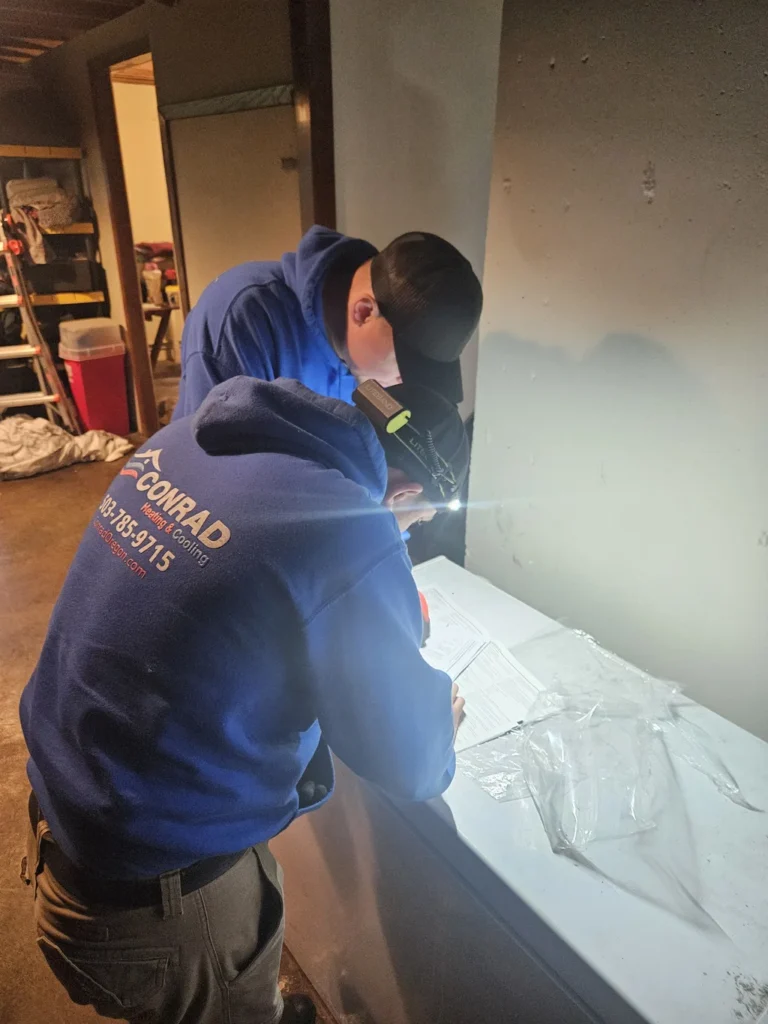
Lowe’s says it plainly in their own installation guide: most states require a licensed HVAC professional for refrigerant lines and electrical connections. Oregon is one of them. R-410A and R-32 refrigerant handling requires EPA608 certification — handling it without that certification is illegal and voids most manufacturer warranties. Conrad’s technicians are CCB licensed, EPA608 certified, bonded, and insured. Upfront flat-rate pricing and same-day availability across Portland Metro. See all heating services Conrad offers.
Why Ductless Mini Splits Are the Right Heating Solution for Oregon Homes
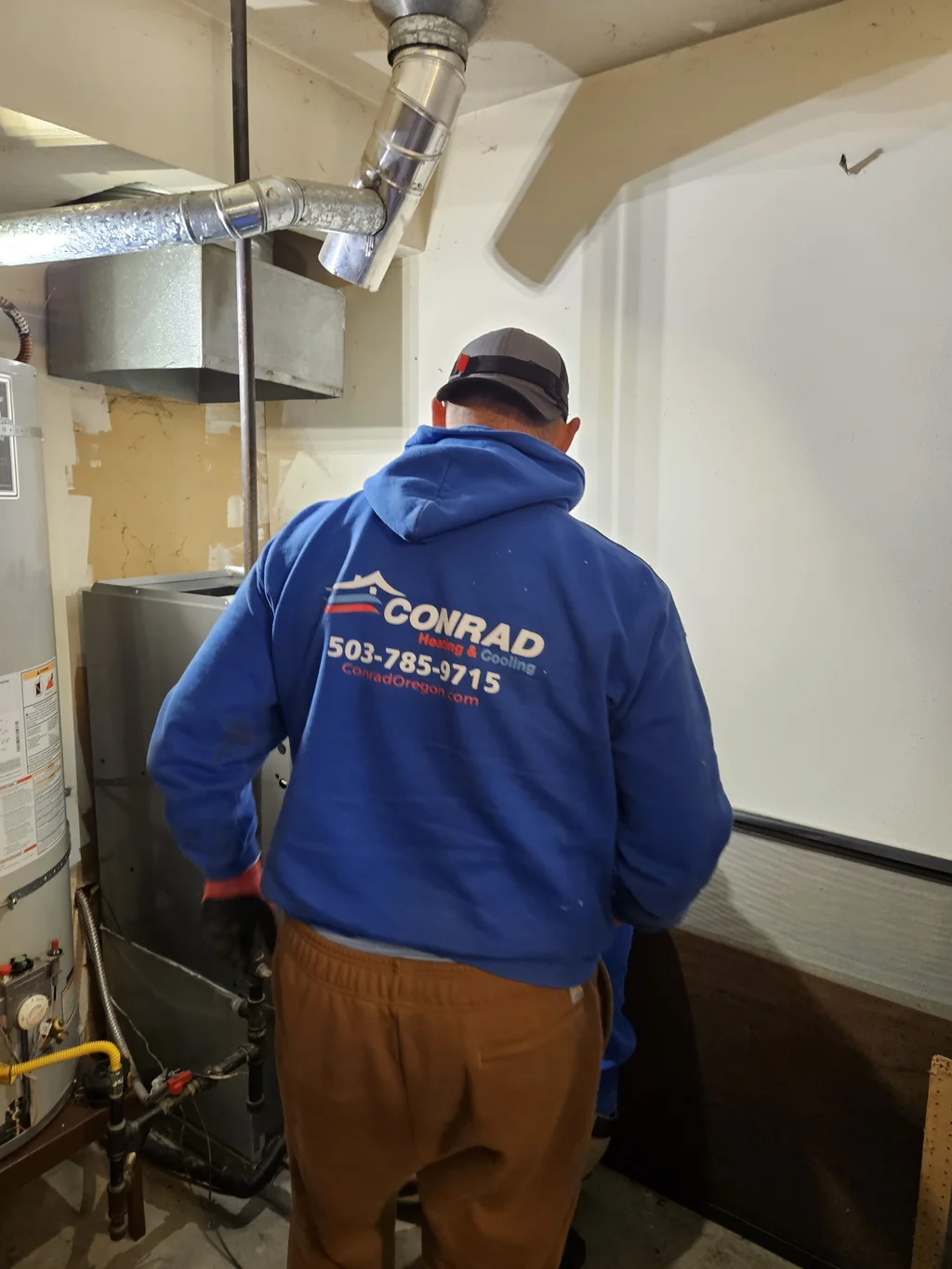
Oregon winters rarely drop below 20°F in the Portland Metro area — and modern cold-climate mini splits operate down to -15°F. HSPF2 ratings of 10+ on quality inverter models. That means a COP of 2.5–4.0: for every unit of electricity, the system moves 2.5 to 4 units of heat into your home. More efficient than electric resistance baseboard. No gas line required.Homes built without central HVAC are the obvious fit — electric baseboard rooms, finished additions, detached garages. The Energy Trust of Oregon offers rebates on qualifying heat pump installations; the federal IRA adds heat pump tax credits. For homeowners primarily focused on summer cooling, mini split AC installation covers that angle.
Single-Zone vs. Multi-Zone Ductless Systems for Beaverton Homes
Single-zone setups pair one outdoor unit with one indoor head — the right choice for one room, an addition, or a targeted problem area. Clean installation, lower cost, straightforward lineset run (15–50 ft). Multi-zone systems connect one outdoor unit to up to five indoor heads, each controlled independently. Inverter-driven compressor modulates output to match demand — steadier temperatures, better efficiency, SEER2 ratings of 16 to 30+ on top models.
Indoor unit types: wall-mounted (most common), ceiling cassette (recessed, better air distribution), and floor-mounted (near baseboard height — good for heating). BTU sizing is determined by room square footage, ceiling height, insulation, and orientation — not by guesswork. R-410A is the current standard; newer units use R-32.
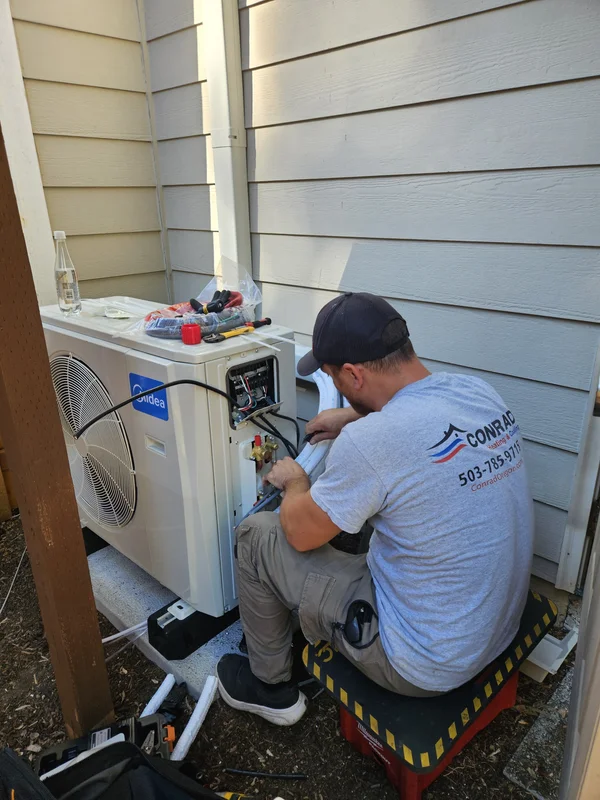
How Conrad Assesses a Ductless Mini Split Installation
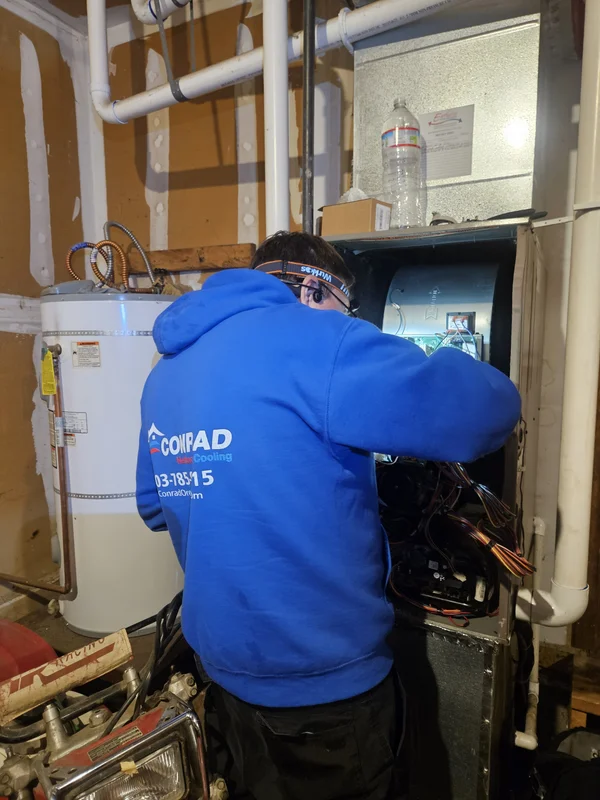
Every ductless mini split installation starts with a site walkthrough. The technician calculates BTU load per zone, evaluates outdoor unit placement (clearance, drainage slope, vibration, noise proximity to bedrooms and property lines), reviews indoor head placement for airflow coverage and condensate drainage, and verifies electrical panel capacity — 240V/15–20A dedicated circuit per head. For multi-zone systems, lineset routing is mapped before any holes are drilled. System selection follows from the site data — not from a catalog price list.
Ductless Mini Split Installation Day: What to Expect
Indoor head mounted, lineset penetration through the wall, refrigerant line connection (R-410A or R-32 — EPA608 certification required), dedicated electrical circuit hookup, vacuum and pressure test, refrigerant charge verified to manufacturer spec. Heating mode tested alongside cooling — both verified before the job closes. Conrad is an authorized Bosch dealer and works with Daikin, Mitsubishi, LG, Carrier, and Goodman. Permits handled. Written diagnostic report left with the homeowner. Ductless mini split repair is handled by the same team.
Ductless Mini Split Installation Cost in Beaverton, OR
Ductless mini split installation cost in Oregon typically runs $3,000–$5,500 for a single-zone system installed — and $5,500–$12,000 or more for multi-zone setups, depending on the number of zones, SEER2/HSPF2 tier, lineset length, mount type, and electrical panel work. Wall material and ceiling height affect labor time.
Worth knowing: the Energy Trust of Oregon offers rebates on qualifying heat pump system installations, and the federal IRA includes heat pump tax credits. Those programs can meaningfully reduce out-of-pocket cost. Conrad provides upfront flat-rate pricing and free estimates — no moving targets.
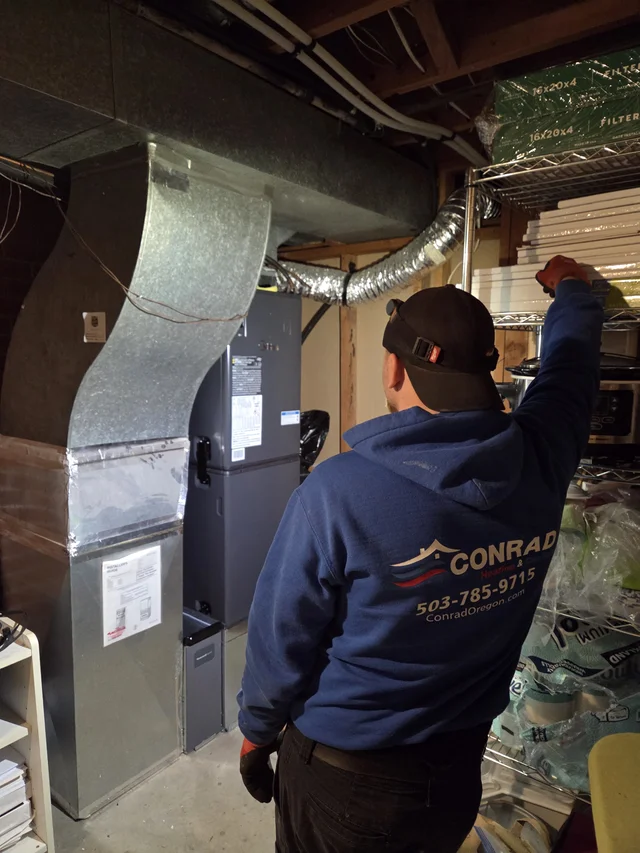

Book Your Furnace Maintenance Today
Fall slots fill faster than most people expect. Conrad Heating and Cooling serves Beaverton and the Portland metro — Mon–Sun, 8 AM–7:30 PM.

Why Choose Conrad for Ductless Mini Split Installation?

Expert Technicians
Conrad’s technicians are CCB licensed and EPA608 certified — the federal refrigerant certification required by law for handling R-410A and R-32. Every tech is background-checked and trained across all major ductless brands: Bosch, Daikin, Mitsubishi, LG, and Carrier. Conrad is an authorized Bosch dealer. The same technician who calculated the BTU load and planned the lineset routing handles the installation — no subcontractors involved at any stage.

Prompt Service
Same-day scheduling is available across Portland Metro. Conrad offers 24/7 emergency dispatch for urgent heating or cooling situations. For ductless installations, Conrad schedules a site assessment first — so installation day runs without surprises on electrical capacity or lineset routing. Most single-zone installations are completed in one visit; multi-zone systems are scheduled across a clear timeline from the initial assessment.

Everything In-House
Conrad handles the complete ductless installation — BTU load calculation per zone, system selection, outdoor unit placement, lineset routing, indoor head mounting, refrigerant charging, electrical hookup, permit, commissioning in both heating and cooling mode, and written diagnostic report. Follow-up repairs and maintenance agreements go through the same team. No subcontractors, no relay calls, no handoffs between an installation crew and a service crew.

Customer-Centric Approach
Upfront flat-rate pricing is confirmed before any work begins. After installation, a written diagnostic report documents what was installed, refrigerant charge specifications, and how the system performed during commissioning. Conrad also walks the homeowner through the remote control settings, operating modes, and the maintenance steps — filter cleaning schedule and annual refrigerant check — that protect the system’s efficiency over time.