
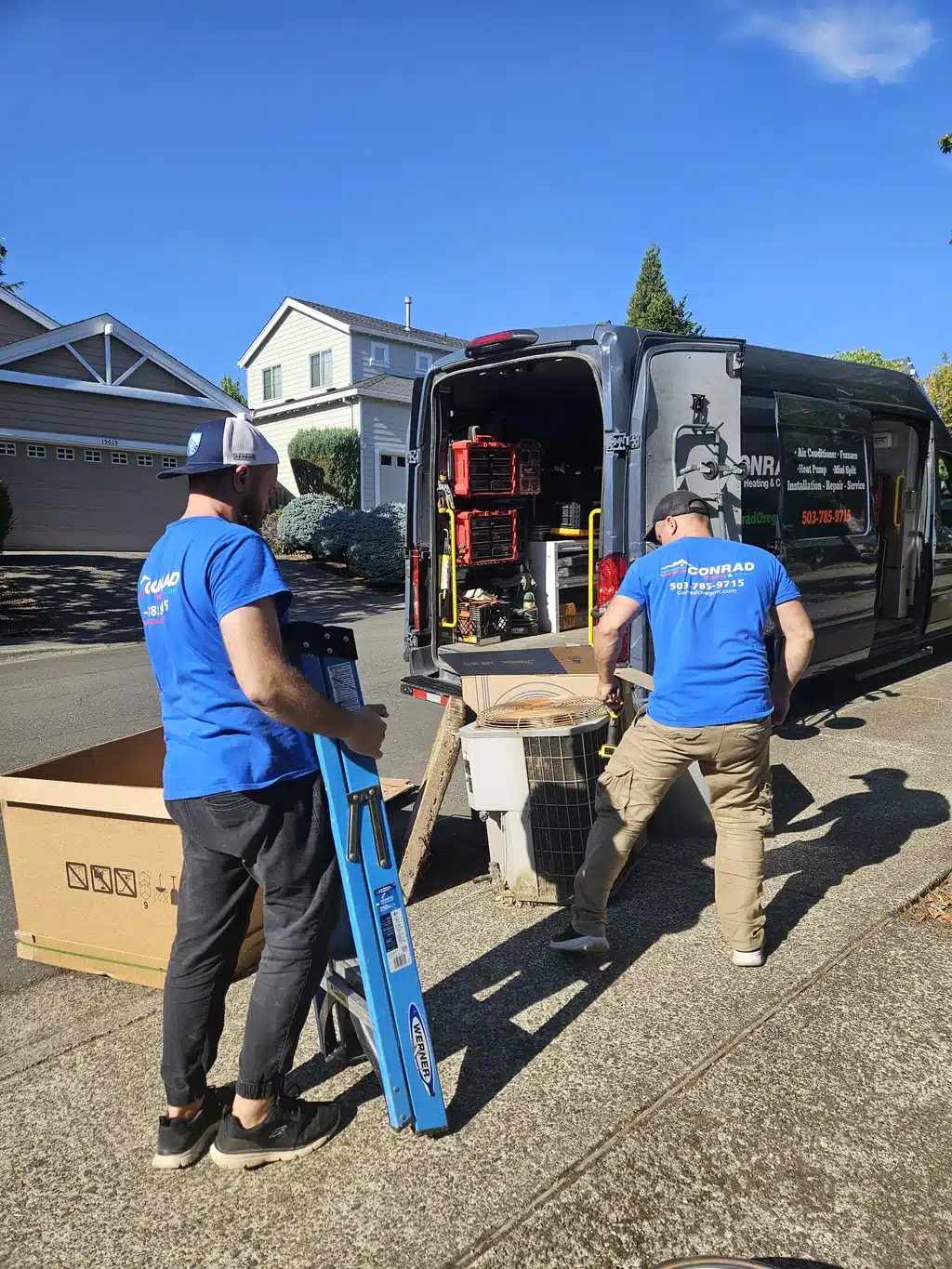

Water Heater Expansion Tank Installation
Oregon code requires a water heater expansion tank on every closed-loop residential water system — and getting the pre-charge pressure right matters just as much as the install itself. Conrad Heating and Cooling is the local team to call. Reach us at 503-785-9715. Our WHI-certified, CCB-licensed technicians install and replace expansion tanks for homeowners across Beaverton and the Portland Metro area. Same-day scheduling, upfront flat-rate pricing, and a written report after every job. Google-rated 4.9 out of 5.
Customers rate us a 4.9 out of 5  on Google.
Our Water Heater Services
Conrad handles expansion tank installation, water heater installation, and water heater repair for homeowners across Portland Metro — all in-house, WHI-certified technicians, no subcontractors.

Expansion Tank Installation
Supply pressure measurement, tank sizing, pre-charge set to match actual pressure (not factory default), and post-installation verification. Required by Oregon code on closed-loop systems. Same-day availability. Written diagnostic report.

Water Heater Installation
Gas, electric, tankless, and heat pump water heater installation — Conrad includes expansion tank check on every water heater job. Site assessment, permitting, and full written diagnostic report.

Water Heater Repair
Same-day repair on element failure, gas valve issues, T&P valve replacement, and condensate drain service. WHI-certified technicians, upfront flat-rate pricing, written report after every call.
Why Expansion Tank Installation Requires the Right Setup in Beaverton
Oregon code requires expansion tanks on all closed-loop water systems — but the install is only half the job. Most expansion tanks leave the factory pre-charged to 20 PSI. Portland Metro residential water pressure typically runs 50–60 PSI. Install a 20-PSI tank on a 55-PSI system and the diaphragm wears out in 2–3 years instead of 5–10. Conrad’s technicians measure supply pressure first, set the pre-charge to match, and verify it before leaving. CCB licensed, WHI certified, bonded, and insured. Upfront flat-rate pricing and same-day availability. See all water heater installation services Conrad offers.

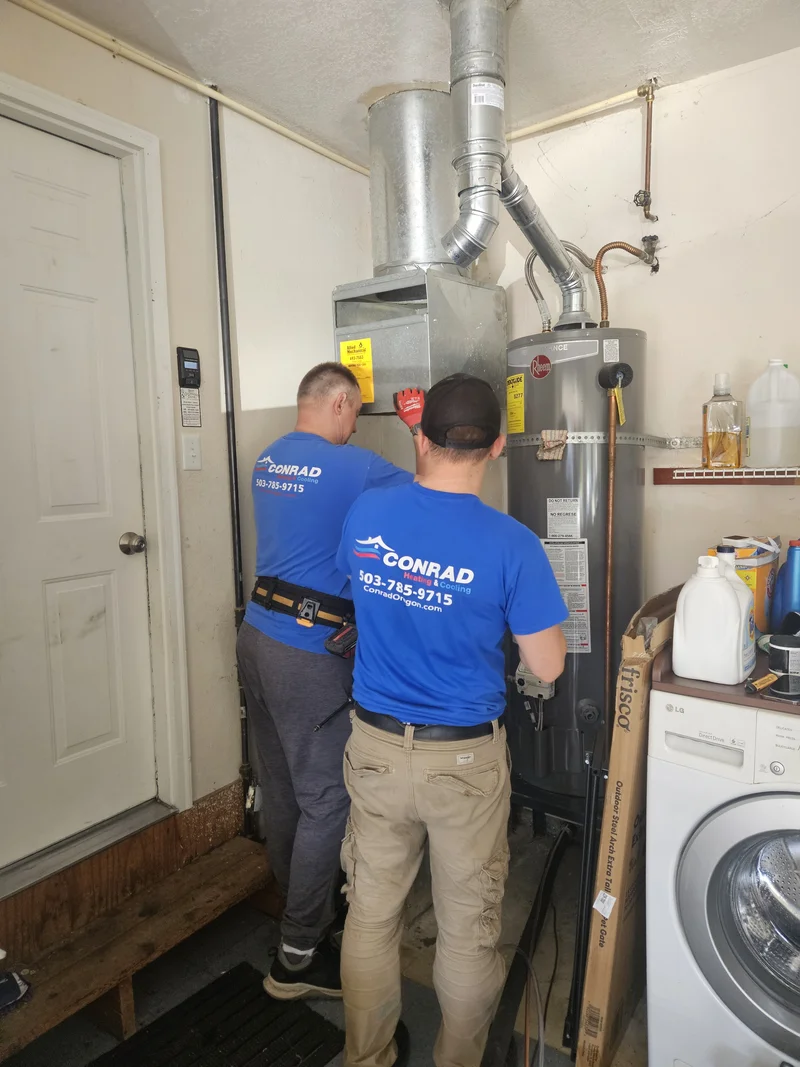
What a Water Heater Expansion Tank Does — and Why Oregon Requires It
When water heats, it expands — in an open system, that extra volume has somewhere to go. In a closed-loop system (any home with a backflow preventer or PRV), it has nowhere to go except against the T&P relief valve, tank walls, and supply lines. An expansion tank absorbs that pressure through a rubber diaphragm: air below, water above. When system pressure normalizes, the diaphragm pushes the water back out.
Oregon code requires expansion tanks on all closed-loop residential water systems. Standard sizing: a 2-gallon tank for most 40–50 gallon water heaters; 5-gallon for 80-gallon or high-demand setups. Installed on the cold water supply line, near the water heater. One connection point.
Signs Your Expansion Tank Is Failing or Missing
An expansion tank lasts 5–10 years. When the rubber diaphragm fails, the tank becomes waterlogged — all water, no air cushion. Without that buffer, the T&P relief valve starts absorbing thermal expansion pressure. That’s the sign most homeowners notice first: a dripping or repeatedly cycling T&P valve, or water hammer — banging in the pipes when fixtures close.
A failed tank can also be identified by feel — a healthy tank is light because of the air inside; a waterlogged one is noticeably heavier. Conrad checks expansion tank condition on every water heater visit. If the T&P valve is dripping repeatedly, don’t ignore it. That’s a pressure management problem. Water heater repair is available for pressure-related issues.
How Conrad Assesses an Expansion Tank Installation
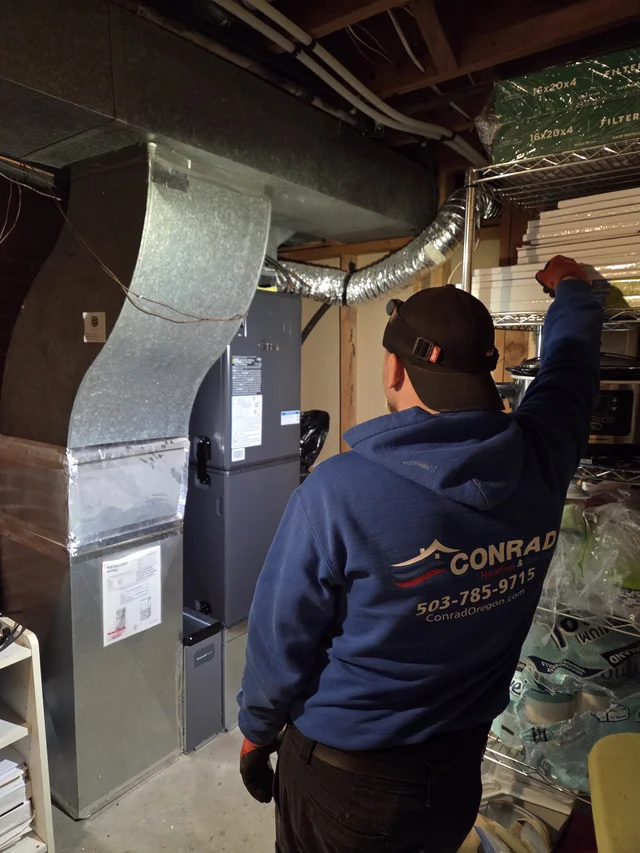
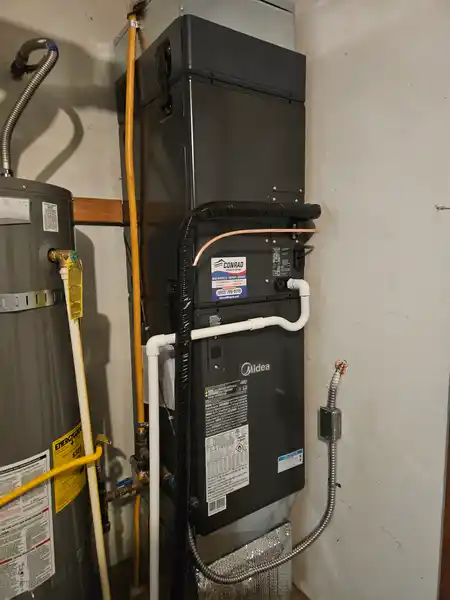
Every expansion tank installation starts with a pressure check — not a guess. Conrad’s technician measures supply pressure at the water heater (50–60 PSI is typical in Portland Metro; anything above 80 PSI means a PRV goes in first). Tank size is confirmed: a 2-gallon Amtrol, Watts, or equivalent handles most 40–50 gallon water heaters; 5-gallon for larger tanks or high-demand households. The tank’s pre-charge (via a Schrader valve on the tank body) is set to match measured supply pressure before anything goes in.
Expansion Tank Installation Day: What to Expect
Water supply shut off, cold supply line identified above the water heater, ¾” NPT fitting prepared (dielectric nipple if connecting to galvanized), tank threaded onto the cold line. Most tanks install horizontally or vertically — the connection must face the water heater. Supply restored, pressure verified at gauge, all fittings checked for leaks. Permitting handled when required. Written diagnostic report. Expansion tank work is often completed the same visit as a water heater install or service call — see all water heater services Conrad offers.
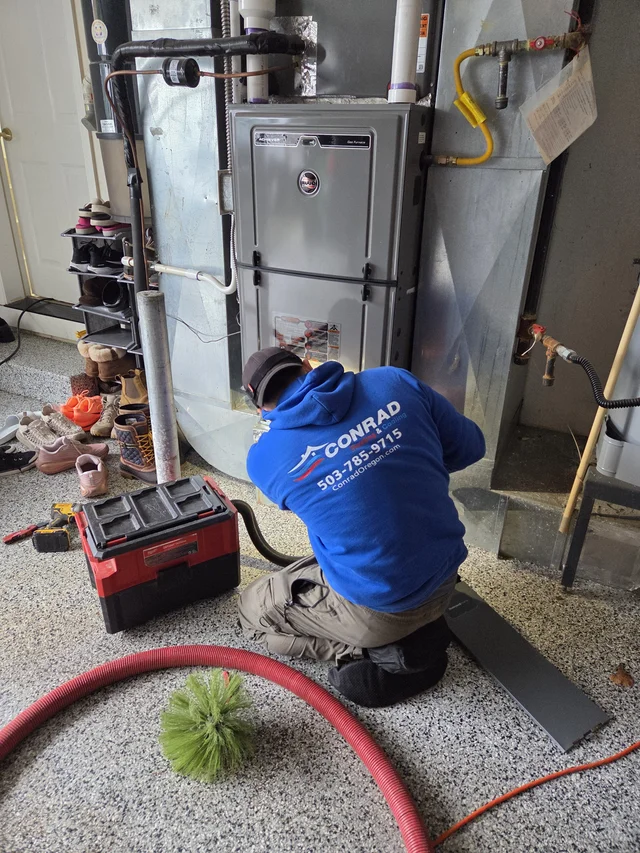

Book Your Furnace Maintenance Today
Fall slots fill faster than most people expect. Conrad Heating and Cooling serves Beaverton and the Portland metro — Mon–Sun, 8 AM–7:30 PM.

Why Choose Conrad for Expansion Tank Installation?

Expert Technicians
Conrad’s technicians are CCB licensed and WHI certified — and understand that an expansion tank installed at the wrong pre-charge pressure is nearly as useless as no tank at all. Every installation starts with a supply pressure measurement. Pre-charge is set to match that number before the tank goes in, then verified after. Technicians are background-checked and work in-house — no subcontractors handling the pressure calibration step.

Prompt Service
Expansion tank installation is often completed same-day, either as part of a water heater installation or as a standalone service call. Conrad offers 24/7 dispatch across Portland Metro. If a T&P valve is repeatedly dripping — the most common sign of a failed or missing expansion tank — that situation warrants prompt attention. Conrad can usually schedule same-day service when a pressure relief issue is actively occurring.

Everything In-House
Conrad checks expansion tank status on every water heater service call — it’s part of the site assessment, not an afterthought. Expansion tank installation, water heater replacement, and follow-up service are all handled by the same licensed team. No referral to a plumber for the tank and a separate HVAC contractor for the water heater — one team covers the complete scope.

FlCustomer-Centric Approach
The flat-rate price for expansion tank installation is communicated before work begins. After installation, a written diagnostic report documents the pre-charge pressure set, the supply pressure measured, and the final verified pressure. Conrad also explains what signs of failure to watch for — waterlogged tank feel, T&P cycling, water hammer — so the homeowner can catch the next issue early.