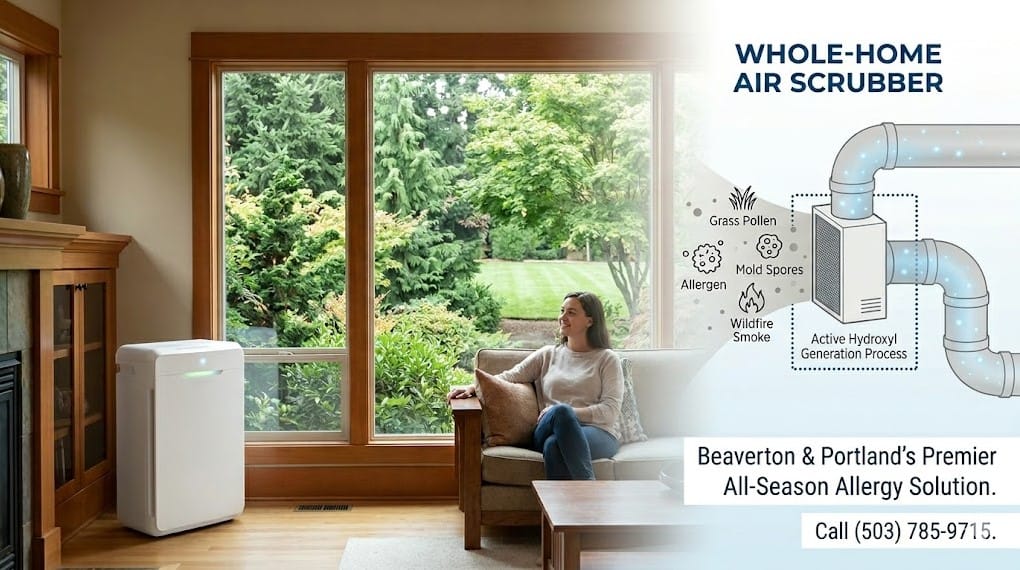
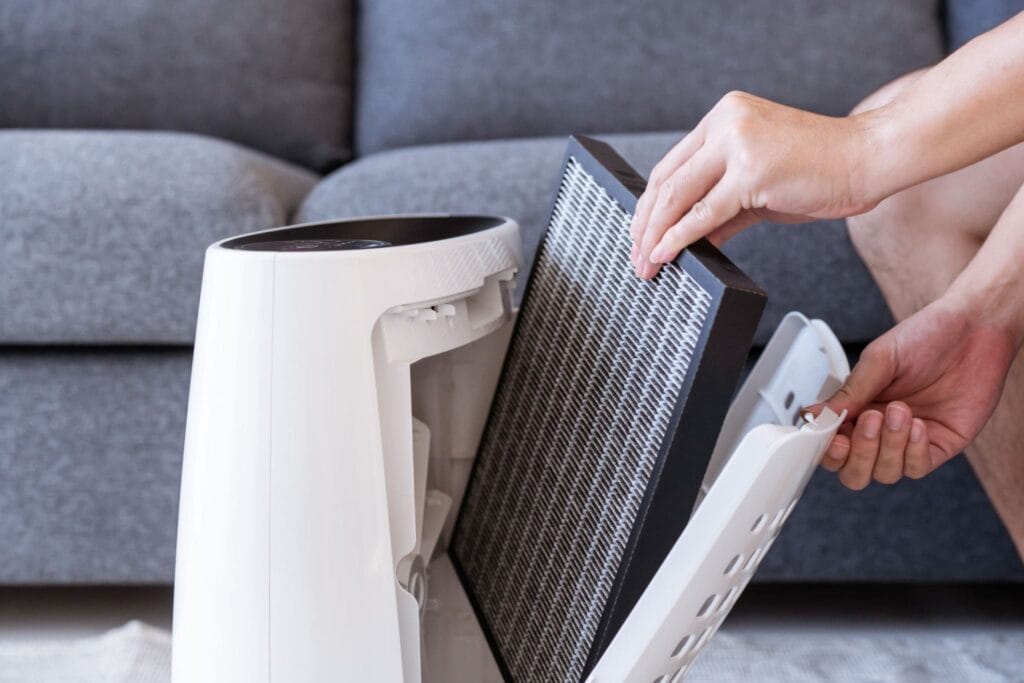
If you’ve already tried a portable HEPA filter and still wake up congested, you’re not imagining things. The unit is probably working fine. The problem is you’re fighting a whole-house problem with a single-room tool.
Here’s what actually happens: your HVAC system pulls air from every corner of the house, runs it through the ducts, and redistributes it — including the pollen, dust mites, and pet dander that bypassed the little box humming by your nightstand. That’s why homeowners in Beaverton and Portland keep upgrading room filters and still can’t get ahead.
Oregon Allergies Hit Different
Most of the country deals with ragweed in fall, tree pollen in spring. The Willamette Valley does all of that — then adds something most people outside allergy circles don’t know about: industrial-scale grass seed farming. This valley grows more grass seed than anywhere else in the world. From roughly May through July, pollen counts in Beaverton, Tigard, and Portland routinely hit “very high” on EPA charts.
Layer on top of that the wet Oregon winters that feed year-round mold growth, and you’ve got a problem that doesn’t go away in September.
A standard 1-inch MERV-8 furnace filter — the kind that came with your house — does almost nothing against mold spores and fine allergens running 1–10 microns. They pass straight through.
Room Filter vs. Whole-Home Air Purifier: What the Numbers Actually Say
This is where most people make the wrong purchase decision.
| Portable HEPA Room Unit | Advanced Air Scrubber | |
| Coverage | 1 room (~150–200 sq ft at 6 ACH) | Entire home via ductwork |
| Treats surfaces | No — air only | Yes — active oxidizers reach surfaces |
| Runs automatically | Only when switched on | Every time your HVAC runs |
| Handles allergens from other rooms | No | Yes — treats air before redistribution |
| Installation | Plug in, done | HVAC tech, 2–3 hours |
| Ongoing cost | $45–60/yr per filter, per room | Lamp replacement ~every 2 years |
| Power draw | 30–80 watts (varies by model) | 18 watts |
The Levoit Core 400S — one of the better room units on the market — delivers 134 CFM at a quiet fan speed. Enough for roughly 167 square feet. Your bedroom, maybe. Not your house. And the moment you open the door in the morning, every untreated allergen from the hallway floods in anyway.
What the Advanced Air Scrubber Actually Does
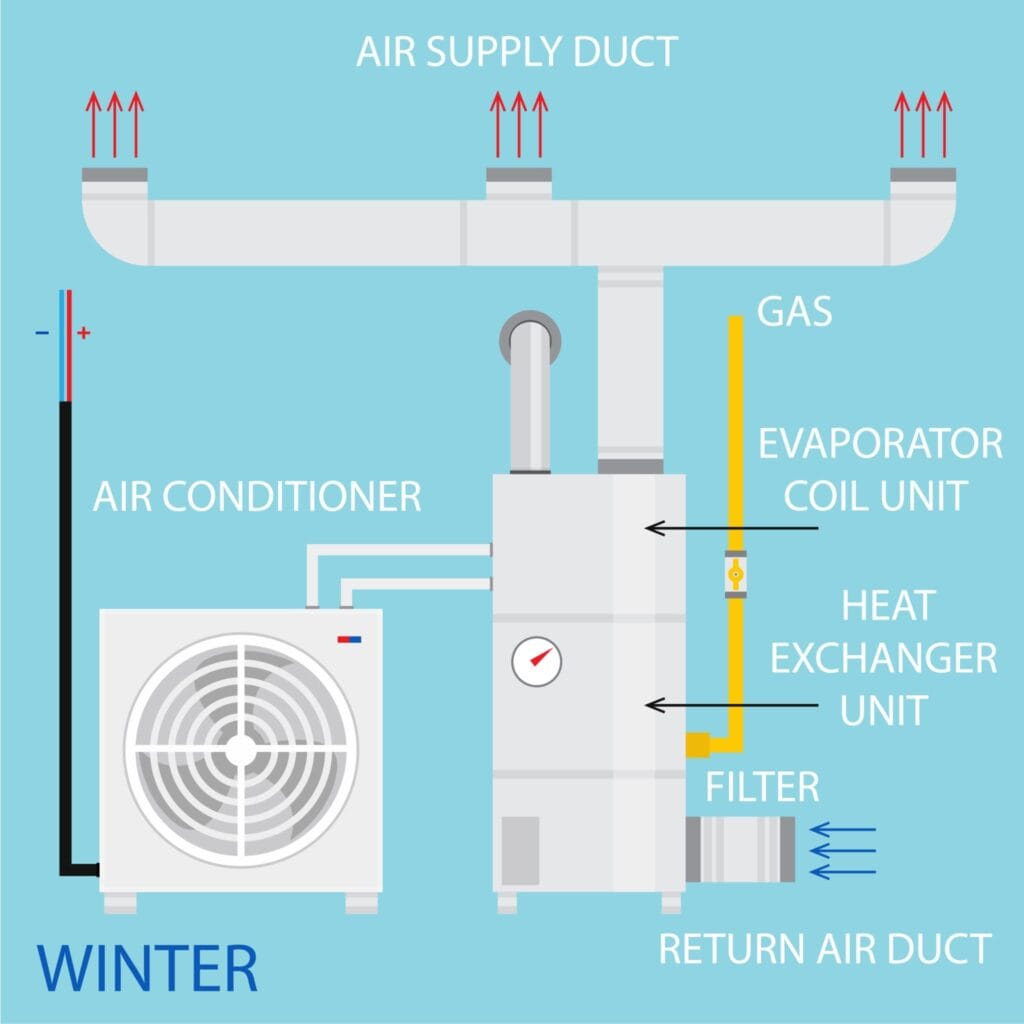
The unit installs inside your existing air handler — a few hours for a licensed tech, no major modification. After that, it runs any time your HVAC runs.
Inside the scrubber, an internal reaction process produces active molecules that break down the molecular structure of mold, bacteria, VOCs, and viruses — not just trap them.
No ozone. 18 watts of power draw. Continuous operation.
Independent lab testing shows up to 99% reduction of airborne and surface contaminants under controlled conditions. Real-world results vary by home size and duct layout — but most allergy sufferers notice fewer morning symptoms within two to three weeks.
The One Thing That Makes It Work Better
The scrubber and your HVAC filter are two different mechanisms working in sequence — and both need to be doing their job. We pair the Advanced Air Scrubber with a MERV-11 or MERV-13 filter: handles particles down to 1 micron without creating enough resistance to starve your blower motor. The filter catches the large stuff; the scrubber handles the fine allergens the filter misses.
Skip the filter upgrade and you’re leaving half the system on the table.

Real Questions We Hear from Beaverton Homeowners
“I already have a room purifier in the bedroom. Why isn’t it enough?” Because your bedroom door opens. Every time it does, untreated air from the rest of the house comes in. The whole-home approach treats the air before it reaches any room — your bedroom included.
“Does this actually help with the grass pollen season in May and June?” Yes, meaningfully. The system continuously treats recirculating air, so the pollen load in the house stays low even when outdoor counts are high. It won’t stop pollen from entering when doors open — but it clears it out fast instead of letting it accumulate.
“What about wildfire smoke in summer?” It reduces VOCs and fine smoke particulates. For heavy smoke events, also seal fresh-air intakes temporarily and swap filters more frequently. The scrubber helps, but heavy smoke is a high-load situation where stacking measures matters.
“How is this different from just getting a better HVAC filter?” A better filter captures particles that pass through it. The Advanced Air Scrubber generates active molecules that travel to where allergens are — including surfaces. Different mechanism entirely. The best setup uses both.
“What does it cost?” Installed, typically $700–$1,200 depending on system access and configuration. For context: two portable HEPA units with annual filter replacement run you $150–200 per year, every year, without treating surfaces or the rest of the house.
Is Your Home a Good Candidate?
It needs forced-air ductwork — furnace, air handler, or heat pump. Most homes in Beaverton, Tigard, Hillsboro, and Portland built after the 1980s qualify without any major modification.
If you’re not sure whether your system can support it, a quick walkthrough by a tech will tell you in 15 minutes.
Conrad Heating and Cooling installs the Advanced Air Scrubber across the Portland metro area. Call (503) 785-9715 or request a free quote online.

 (503) 785-9715